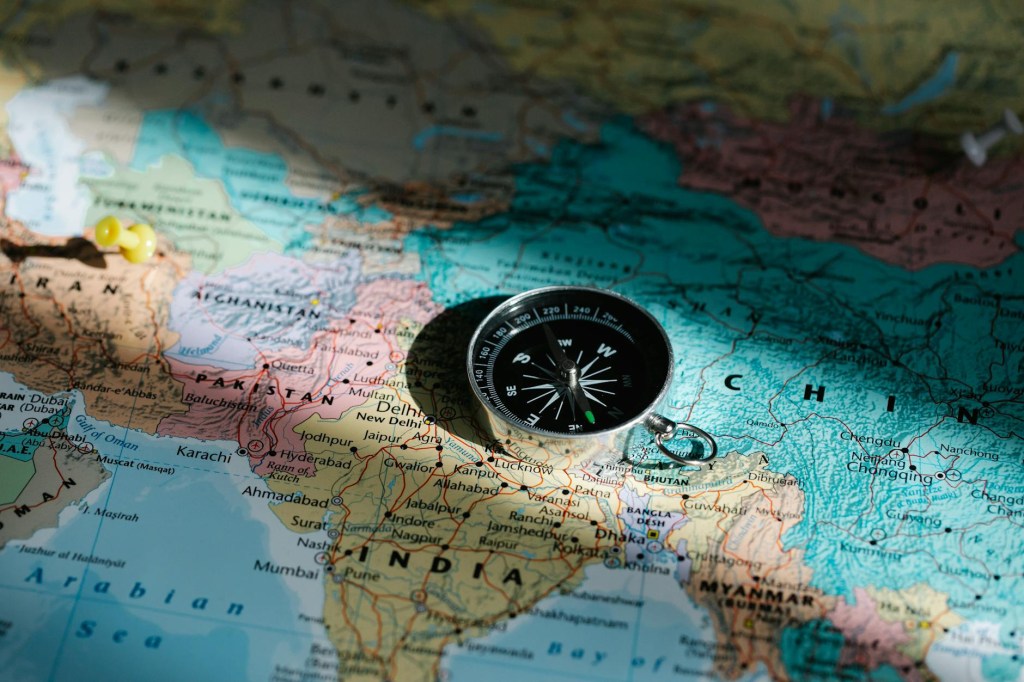
The serene meadows of Pahalgam, once a postcard of Kashmir’s gentle beauty, now lie heavy with grief. The recent terrorist attacks that left 26 innocent tourists dead and that tore through this sacred ground have left behind more than shattered glass and spilled blood—they’ve deepened an already festering wound. The killing of innocents—ordinary Kashmiris, pilgrims, civilians—has become a haunting refrain in a region caught between two nuclear-armed rivals.
Once again, Kashmir finds itself at the heart of an unresolved storm.
India and Pakistan, neighbors bound by blood, history, and hurt, continue to orbit each other in a dance of distrust. For over seven decades, this conflict has remained one of the most dangerous flashpoints on the planet. And the latest violence in Pahalgam threatens to once more tilt the fragile balance.
The drums of war beat louder each time such attacks happen. Emotions boil, rhetoric rises, and the temptation to respond with force grows stronger. Add to this the rising Islamophobia with innocent Indian Muslims and Kashmiris treated as outsiders among their own country. But let us not forget: a full-scale war between India and Pakistan would not be a television event—it would be a catastrophe of unthinkable proportions.
Both nations possess nuclear weapons. Both have massive populations living in dense cities with minimal civil protection. An all-out war would not just claim soldiers’ lives—it would devastate generations. Infrastructure would crumble. Economies would collapse. Crops, rivers, and skies would bear the scars of fallout. And perhaps worst of all, the ghosts of those lost would outnumber the living who remember peace.
Kashmir, already bleeding, would become a graveyard of possibilities.
The people of the subcontinent—on both sides—deserve better than the constant threat of annihilation. And yet, year after year, the cycle continues. Provocations and responses. Militancy and crackdowns. Dialogue that stops before it starts. In this pattern, who truly wins?
The attacks in Pahalgam were not just an act of terror—they were a cruel manipulation of this fragile balance and aimed to stoke communal hatred amidst this. Terrorism thrives on instability. It feeds off fear. It seeks to polarize, to push nations into the very kind of war it could not win on its own. If we allow ourselves to be dragged into that trap, we hand victory to those who deserve it least.
This is not a call for weakness. Justice must be served. Terrorism must be confronted, and those responsible must face consequences. But justice is not vengeance. And security built only on retaliation is brittle. The real strength lies in de-escalation—having the courage to talk when it’s hardest to do so, and the foresight to imagine a future beyond conflict.
At a time when the world is spiraling into chaos—Gaza burning, Ukraine ravaged, Sudan forgotten—it becomes even more vital for nations like India and Pakistan to choose a different path. To be examples of restraint in an unrestrained world. To prove that history does not have to be destiny.
Who, if not us, will be the voices of sanity?
We need international mediators and regional coalitions not just to react after tragedy strikes, but to prevent the next one. We need backchannels, open dialogue, cultural exchange, and people-to-people contact. We need to remember that peace is not an endpoint but a process—fragile, slow, and deeply human.
And most of all, we need to remember the faces of those lost in Pahalgam—not as statistics, not as collateral—but as a mirror. They were us. They are us.
So let this be the moment we refuse to be pulled into the abyss. Let it be the moment we speak not just with anger, but with clarity. Let it be the moment we declare: no more.
No more children caught in crossfire.
No more villages turned into frontlines.
No more deaths in the name of patriotism that forgets its people.
We have tried war. We have tried silence. It is time we try peace—with the same conviction we once reserved for conflict.
 Priya writes
Leave a comment